
Naira Stability in 2026: What It Actually Means for Your Money
MARKETS
7/10/20262 min read
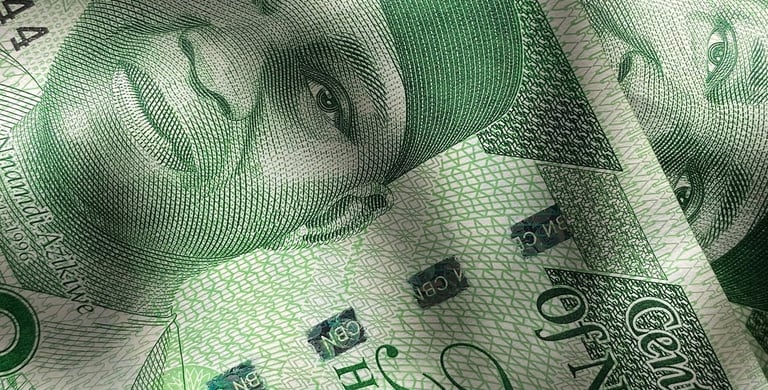
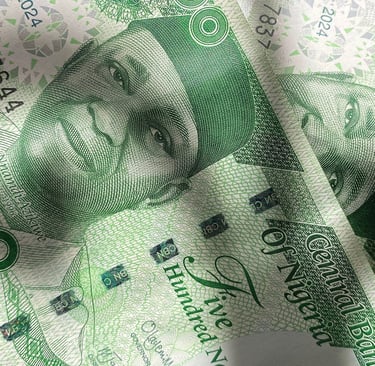
For the first time in years, the naira isn't the headline nobody wants to read. Through the first half of 2026, Nigeria's currency has held remarkably steady against the dollar, trading in a relatively narrow band, and that stability is no accident.
What's driving it
Three things are working together:
Elevated interest rates. The Central Bank of Nigeria (CBN) has kept its benchmark rate high through 2026, currently sitting at 26.5%. That's painful if you're borrowing, but it's exactly why the naira has held up: high rates make Nigerian government securities attractive to foreign investors chasing yield, and that demand keeps dollars flowing into the local market.
Record external reserves. Nigeria's gross external reserves have climbed to around $51.5 billion, the highest level since 2009, largely on the back of oil earnings and higher production. Bigger reserves give the CBN more room to smooth out FX volatility when it needs to.
Steady foreign portfolio inflows. Investors buying into Nigerian Treasury bills and OMO instruments (some yielding around 20%) have kept dollar liquidity healthy in the official market.
The catch
Analysts are calling this a "hot money" equation, and it's a fair label. Much of the capital coming in is chasing short-term yield, not funding factories or long-term production. That means the stability is real, but it's also conditional: if the CBN starts cutting rates before Nigeria's productive base is stronger, some of that foreign capital could just as easily leave.
Inflation is also not fully tamed. Headline inflation ticked back up to 15.7% in April after nearly a year of steady declines, a reminder that price stability and currency stability don't always move in the same direction at the same pace.
What this means for you
If you're a saver or investor, this is a good window to look at naira-denominated fixed income (see our Treasury bills post) while rates are still elevated.
If you're a borrower, don't expect cheap loans soon. High rates are the whole reason the naira is behaving, so the CBN has little incentive to cut quickly.
If you run a business with international exposure, the relative calm is good news for planning, but build in a buffer. Currency stability built on rate differentials, rather than structural export growth, can be reversed by global shifts in risk appetite.
The bottom line: enjoy the calm, but don't mistake it for a cure. The naira looking good and the Nigerian economy being fundamentally strong are two different things right now, and the gap between them is exactly what smart financial planning should account for.
This article is for general information only and does not constitute financial advice. Speak with a licensed financial advisor before making investment decisions.
Plot 579 David Jemibewon Cres, Gudu, Abuja
contact@ecoopsfinancial.com
+2349133039965
© 2024 Ecoops Financial Services Limited. All rights reserved.


NEWSLETTER
Sign up for our newsletter to get updated information, news, insight, or promotions.
OUR COMPANY
SUPPORT
Regulatory Notice: Licensed by the Nigerian Securities and Exchange Commission (SEC). ECOOPS Financial Services Limited provides regulated portfolio optimization and infrastructure solutions in accordance with national legal structures to preserve systemic protection, accuracy, and corporate scale.